What Happened To Spiro Agnew?
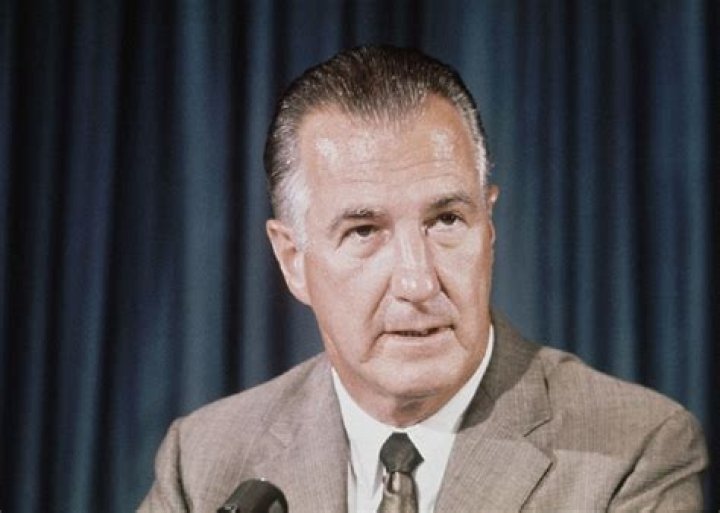
Many individuals have inquiries concerning the 39th VP of the US, because of his contribution in an embarrassment. Individuals frequently inquire, “What befell Spiro Agnew?” as they are interested to find out about the subtleties of the embarrassment.
Spiro Theodore Agnew, the 39th VP of the US, held office from 1969 until his renunciation in 1973. His renunciation marked him as the second VP in history to step down, the first being John C. Calhoun in 1832.
Agnew started his political profession as a helper to U.S. Delegate James Devereux, later serving on the Baltimore Area Leading group of Drafting Requests in 1957.
He rose through the positions, becoming Baltimore Area Leader in 1962 and afterward Legislative head of Maryland in 1966, where he crushed his Majority rule adversary George P. Mahoney and free up-and-comer Hyman A. Pressman.
Agnew, who filled in as the 39th VP of the US, struggled in the late spring of 1973. He was blamed for doing terrible things like requesting cash, accepting hush money, and not appropriately settling his duties.
The political figure attempted to protect himself by saying that the allegations were false and that a VP couldn’t be accused of a wrongdoing while in office.
Notwithstanding, the legitimate insight prompting the public authority expressed that a VP could have to deal with penalties. Along these lines, an ever increasing number of individuals believed him should leave his place of employment. To make him leave the rundown of individuals who could become president, his legal counselors subtly conversed with an appointed authority and made an arrangement.
At last, on October 10, 1973, Theodore left being VP. He conceded in court that he hadn’t detailed $29,500 of pay on his assessment form. He got a fine of $10,000 and needed to act well for quite a long time without anybody watching him.
The outrage encompassing Spiro Agnew focused on his contribution in defilement during his experience as Baltimore District Leader and Legislative head of Maryland.
He caused problems since he was furtively accepting cash from project workers act of goodwill some help for giving them contracts. He continued to take this cash in any event, when he became VP.
This issue was not equivalent to the Watergate issue that occurred simultaneously. He was not associated with the Watergate issue.
Despite the fact that the government official said he did nothing off-base for quite a while, he in the end conceded that he didn’t pay his duties accurately.
He argued no challenge, and that implies he didn’t concede culpability however acknowledged the discipline. Subsequently, he needed to leave his place of employment as VP.
President Richard Nixon picked Gerald Passage to have his spot. In the wake of leaving office, he carried on with a peaceful life and didn’t show up in open frequently.
The examination concerning Spiro’s defilement began in mid 1972, when George Beall, the US Lawyer for the Area of Maryland, started investigating debasement in Baltimore District.
From the start, the political figure’s name came up as a potential objective, however Beall didn’t give a lot of consideration on the grounds that as far as possible for indicting any bad behavior during Agnew’s experience as province chief had lapsed.
Notwithstanding, as the examination went on, proof became exposed that Agnew had been engaged with degenerate exercises even while he was VP.
Witnesses, as Lester Matz, who had been making unlawful installments to him, were prepared to affirm against him. In August 1973, the examination became public information after The Money Road Diary provided details regarding it.
Theodore emphatically denied the allegations, yet as the strain developed, he began haggling for a supplication deal to try not to go to prison.
In 1973, VP Spiro Agnew attacked the DOJ. 50 years later, history repeats itself.
Agnew: “I will not resign if indicted.”
Eleven days later he resigned. #Maddow
— Garin Pirnia (@gpirnia) June 13, 2023
On October 10, 1973, he argued no challenge to one crime allegation of not paying duties for the year 1967. He needed to pay a $10,000 fine and be waiting on the post trial process for a long time.
The legislator composed a renunciation letter to Secretary of State Henry Kissinger, and he likewise sent a letter to President Nixon, who concurred with the renunciation, expressing the need to forestall further division and vulnerability.
Subsequent to leaving, Agnew’s political vocation reached a conclusion, and he carried on with a somewhat calm life. He functioned as a specialist for unfamiliar organizations, and in his book “Go Unobtrusively… or disaster will be imminent,” distributed in 1980, he guarded his political vocation and condemned authorities from the Nixon organization.
Spiro Agnew continued announcing his guiltlessness and shielding his conduct in his biography and book in the wake of being disallowed from providing legal counsel by the territory of Maryland in 1974.
Related Archive

Sarah Jessica Parker Is Going To Introduce Her Own Line Of Wallpaper
Andie MacDowell And Laura San Giacomo Will Reprise Their Roles In ‘Sex, Lies, And Videotape’ Sequel — Fans Demand James Spader Returns

Bethenny Frankel Describes In Court How Jason Hoppy ‘Tortured’ Her And Breaks Down Sobbing